Happy Advent! I haven’t posted anything related to Advent or Christmas yet, largely because I got COVID for the first time ever right after Thanksgiving, and I’m still recovering from it. My workplace also has a lot of festivities – more than I think is appropriate – which also take time, money, and energy, and are harder to do when you’re exhausted and also trying to keep up with your actual work and also trying to practice your own religion around all the secular stuff and the extra obligations and demands.
And it’s strange how the merriment begins right after Thanksgiving and then abruptly ends on December 26th – this period from the first day of Advent, on the Sunday four weeks until the week of Christmas and on through Christmas Eve, is not a time of feasting, but rather joyful preparation for Christmas, which is from December 26th through the Epiphany on January 6th, aka the 12 Days of Christmas.
Christmas Day is December 25th, the birthday of Jesus Christ. This day was chosen not to “compete” with pagan winter holidays such as the solstice or Saturnalia, but because early Christians surmised that Jesus died on the same day He came into the world – March 25th – meaning He was conceived by the Holy Spirit on March 25th, and nine months afterward is December 25th. It wouldn’t make sense to create a competitive holiday to come 4-7 days after the pagan holiday, now would it? People would still be celebrating the pagan holiday and then turn around and celebrate the Christian holiday. This also wouldn’t explain why early Christians, who were not in constant contact with the Romans or the Greeks, let alone other Europeans, celebrated the holiday on what we know as December 25th, since December 25th doesn’t compete with any major Jewish holiday and the early Christians were still mostly Jewish and probably still celebrating the high holy holiday in the fall and then the minor holiday Hanukkah in the colder months.
This is my first truly religious Christmas.
I’m even listening to Ascension’s Face to Face in preparation for Advent. I wanted to do Hallow’s Advent challenge, but I’m not a podcast person, so I had to choose one.
Growing up, we were very culturally Catholic – we had to perform in a Christmas pageant at church, we went to vigil, we celebrated Advent – but there was no strong faith. It’s certainly not like I’ve seen among so many faith communities in Chicagoland: religious and laity who really truly believe and love the Lord. Yes, we have our embarrassments and our problems, and we have some parishes so liberal they may as well just be a drag queen story hour, and we have our cultural Catholics who place more faith in the Democratic Party than they do the Living God, but the body of The Church has many healthy parts here. There’s lots of places to go to confession. There’s daily mass and adoration all over the city. There are apostolates and fraternities, missions, religious and secular orders all over the city. I can go to one church where they allow a layperson to give a homily parroting Harris by saying diversity is our strength, and then I can go to a good church right after where they know that diversity is just a side effect of being the universal church uniting all humans within the Body of Christ, and that our true strength, is Christ, who is actually present in the Eucharist, in the True Church He founded for us, that will not falter or fall from the outside or from within, so we don’t need to pander to anyone to keep numbers up.
I have been Catholic for 11 months now. I have been following Christ for four seasons now, and I am different now. I am the same, but also, different. The Church has been such a gift to me. This past year has been such a gift to me. Someone on my last post wrote a comment that I deleted criticizing me, albeit gently, for “scrubbing away” the past, which is still a part of me. I thought that was weird because I wasn’t intentionally ignoring who I was, and all I did was take down some posts to rework them later because I was in a raw state when I wrote them and simply trying to change what showed up in Google, and I just don’t feel that kind of anger, and I don’t believe that the tone of the work gives glory to God. She’s not following me anymore, which is just as well, because this will happen again and again, as my life, my work, and the things I put out in the world aren’t just about me for me. That never worked for anyone. I was created – just as all of us were – as a gift to Jesus from the Father. I don’t want something haughty or resentful that I wrote to be someone else’s first encounter with Christ either. I’m not famous, so it doesn’t need to stay up as a means to explain my reversion, either.
But since when did any of us become that important anyway?
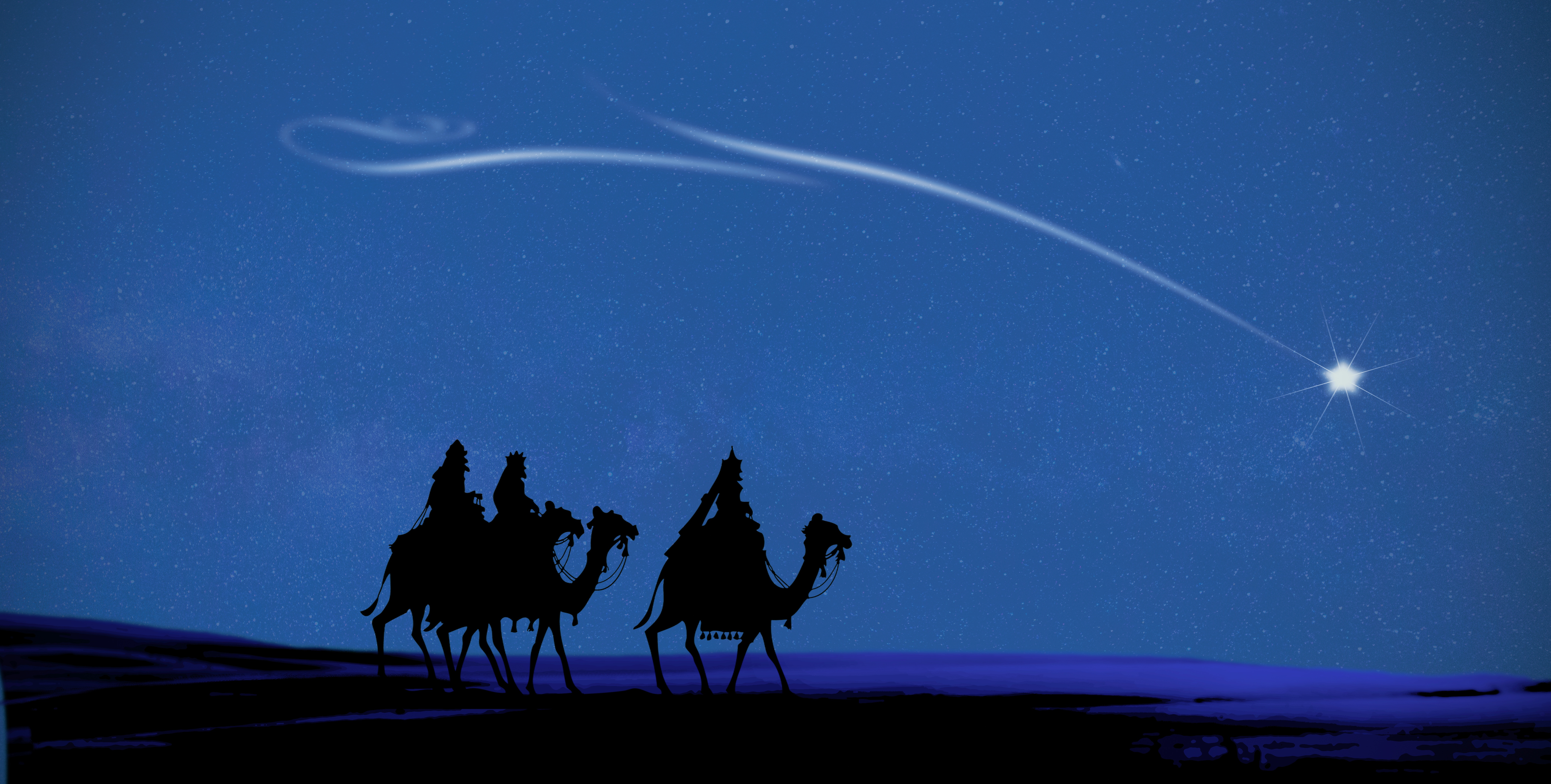
The Wisemen: A Former Astrologer’s Take
Our Lord had planned since at least the fall of mankind to be born of a peasant girl in a nowhere town, raised by a carpenter, and born in a stable in a strange city with no midwife, no relatives, no bed to lay in, His company the beasts of burden and the shepherds – the social outcasts who watched the flocks at night. There was no glory to be seen except to those that God specifically chose to reveal His glory. And yes, the magi: they, like the shepherds, following this star that became bigger and brighter with each passing night until it hung high in the sky over a cave where animals slept. That’s not a free pass to practice astrology, by the way: there were three wisemen, but millions of people all over the world would have seen that star, which would have included so many other wise men in so many other kingdoms and cultures, but as far as we know, only three of them decided to follow it. The moral of the story isn’t that the occult is okay, but rather, God calls to all of us in a language that we understand, and we, His beloved, are given the freedom to listen and to follow Him, and He will always be there with us and He will always be there when we arrive. Three wise men out of the hundreds, perhaps thousands, that existed all over the ancient world, answered the call and decided to take up the dangerous journey into Roman-occupied land to give gifts to a newborn great king in a different land, from a different people. This was an insane political risk, and you know what? Astrologers don’t do that. The entire point of astrology and those kinds of divination is to mitigate uncertainty and diminish risk. It the antithesis to faith, and yet, these three wise men from the East took faith in what they saw and in what they predicted would change the entire world, perhaps even the entire course of human history.
But what I think is even more remarkable is that they kept going when they got to Bethlehem, and they even kept going when they arrived at the spot: a stable. Not a palace, not a castle. Not a gilded city high on a mountain. They walked through a crowded city full of Jews coming for the census and then came to the edge of town, and saw that the star was over this cave where animals were kept.
This could have been the moment that they changed their minds. They could have cut their losses and returned home, never entering the stable and seeing their King as He lay there waiting for them. In fact, for all we know, there were other wise men who may have done just that: turning around and heading home when they followed the star into the Near East, into Judea, passed King Herod and explain to him what they’re doing there and hope to be allowed to keep going, and then into Bethlehem, to the edge of town, to see it hanging over a cave full of animals, passing caravans, Roman soldiers, and Jews heading to their cities of their people for the census. Perhaps there were many other wise men who didn’t make it as far because they couldn’t believe where they were heading, so they refused to believe. Perhaps there were many more wisemen who started the journey, but for whatever reason, turned around and decided not to have faith in the sign and to stop believing what the sign in the sky was supposed to signify. Or, perhaps they became scared as to what this meant. A king above all kings, from Judea? Born in Roman occupation? What would they tell their people? Would their people be able to accept this?
But three wise men from The East made it because they kept going even as the journey appeared increasingly preposterous or unfruitful.
And they went into that stable. They could smell the hay and the dung and the scent of the animals. The heard the snoring of the ox. Stables are not places for royalty; those who go in and out of stables are humble people, because caring for beasts of burden is humble work, so you’re not going to go into a stable and find someone in a gold crown, wearing finery and sitting on a throne, just like you wouldn’t expect to see a monarch in his glory sitting on his throne in a mechanic’s shop.
And this was the most incredible part to me: they saw the humble peasant man and his young wife, and their little baby, wrapped in swaddling clothes and laying in a box that the oxen eat out of, and instead of trusting their eyes, and instead of trusting everything their culture had taught them about what a king should look like, or how a king’s birth should be, or the material wealth that a king should be surrounded by, they placed their faith in the sign and saw Jesus, the King, and gave Him the gifts they carried all the way from the East for a king.
And because astrology isn’t necessarily about leaps of faith, the wise men had two choices: either believe that the prediction is wrong and go back and tell not only King Herod, but their own people, that what they actually found was a peasant baby born in a stable surrounded by animals, or forget everything they know about Earthly kings and accept that this is a new kind of king, a king who is perhaps more than they expected and more than the world expects. After all, the star was still over the stable: wise men become wise because they’re humble enough to learn new things.
I’m sure though that when they entered, they knew it was the place.
Maybe it was the love in Mary’s eyes. Maybe it was the overwhelming peace they felt when gazing at the Lord’s little face. Perhaps it was the pride in Joseph’s face and his lack of shock that these strange men would know that the King is here. Surely, the wise men knew upon meeting Mary and Joseph that they found their King because Mary and Joseph themselves knew that the baby is their King. After all: He beckoned a bunch of shepherds to come in celebration, so why not have a bunch of other people otherwise strange and set apart to also come down from far away and worship the Lord? Why should they be surprised, scared, or suspicious of these men? The Lord is with them.
The wise men believed their dream to not tell Herod about the baby and to go home by a different route, and they did, and then The Holy Family escaped into Egypt to avoid Herod’s wrath.
But the entire time they’re traveling in back to their respective homelands, they’re carrying a narrative they have to share with people who don’t know yet. They have to tell their own people and their own leaders what happened: they met (at least) two other wise men from other places who were also following the star, and they found the King, hidden from the world. I wonder what happened to them afterward. Did they die in obscurity? Were they mocked by their own people? Did the story get passed on through the generations such that when they learn of Jesus Christ one day, they remember that long ago, one of their men left to greet Him? Were they punished for causing bad relations with Herod? I think this is unlikely since Herod was more of a puppet and not a true power and therefore not a real threat. Or perhaps, did they keep this secret locked in their hearts, reaching out to their God in whatever way they knew how, hoping and desiring to know if the King every came into His glory?
And what about when they died and saw Jesus all grown up, glorified, at their judgment? Did they remember Him in their hearts? Could they have fathomed eternity as throne, and Heaven and Earth as His Kingdom? Would they remember the peace they felt when they looked at Him once again at death?
Because the crazy thing is that, in and of itself, this is a story of three foreign men who visited a peasant baby in a stable just outside a crowded city and then they went home, and it’s not the craziest story ever from the outside looking in. Most of Judea wouldn’t have known about this or cared because they may not have known that this was prophesied or that this was a fulfillment of the prophesy. Herod certainly wasn’t going to tell everyone that three people from the East came to see the prophecy fulfilled and that they can all look forward to a way better king. My assumption is the Mary told the Apostles this story, and Matthew and Luke wrote of it in their gospels. Mary, did you know?
YES!
She knew. She knew all of it. Like, she was literally told this by Gabriel, and she’s Jewish, so she knows the religion and she knows the prophecies. Yes, Mary knew. She knew from the Annunciation, and she gave her fiat.
Again, the story of the magi isn’t a case for astrology. That is still a violation of the 1st commandment. Astrology in fact, does work. It’s not forbidden because it doesn’t work, but rather because it does by whatever mechanism makes it work, so one allows occult knowledge and the pursuit of it to become their god. This is a story of three men who heard God as He spoke to them, through the language they used, and called them forth to greet Him personally. They listened to the call that came in their language, as all things are possible with God, and nothing stops Him.
Christmas is the beginning of the liturgical year for a reason.
It was about a year ago that another lonely birthday had passed, another winter solstice was coming, and I wasn’t exactly thrilled to acknowledge the shortest day of the year and the ostensible “return” of the light. I was certain that what I had predicted for the world was not going to turn out the way a lot of other astrologers thought it would, and because I was without faith, I despaired. And yet, God called to me in the language I was speaking in, or rather the languages: in chaos magick, gods are whatever you say they are, and nothing is off limits, so if you’re at the end of your desperation and ask Jesus if you can talk to Him, knowing He will not turn you away, so you talk to Him. And then, you keep talking to Him. And then you read His words. And then you pray. And then you lose interest in the occult. And then you lose interest in a lot of other things that used to matter to you and drop all the anxiety you used to have over those things. Then you discover that He has loved you all this time, and that unlike your own self, He knows what you need before you know what you need, and He gives it to you, for free, out of love. He may even literally show you what the problem is, and He may literally give you a choice to make the change, and when you do, gives you the most incredible gift. Then, you choose to obey Him because you love Him, and then your whole life changes. And a year in, people are still angry at you for throwing out your crystals and tarot cards and astrology books, and a year in, people may still come at you for not placing your own identity as a god on a throne as if such a fleeting and evolving thing like an identity is nearly as important as this culture thinks it is. But it doesn’t really matter today.
Today is the day we ponder what Mary must have felt in her heart as Jesus’s birth was approaching. She already knew from the Annunciation that He was here and that His Word would be fulfilled, but soon, the world would also know. He would suffer, but He would save us. There was once a world before Jesus was in it, and that world is gone, because He’s in it now and forevermore. There was once a life of mine where Jesus wasn’t in it, but that lonely world is gone, because He’s in it now. I am very aware of my past; I don’t need to keep up an old blog to remind me of it. And I don’t think everyone else in the world needs to be reminded of it, either. Maybe the kindest thing I can do is liberate all of us from those shackles: there’s nothing more tedious than a person whose insistence on “keeping it real” keeps them in a perpetual state of adolescence.
If the wise men have also taught us anything, it’s that the journey is worth it, but it’s the destination that means everything – a journey without a destination is just wandering, and anyone can do that, but it takes someone with faith to believe in the destination being there.
Advent isn’t just a time to prepare for Christmas coming, but for Christ’s Second Coming, which I’m starting to realize is probably the exact reason why the culture (and my workplace) interferes with Advent by continuously throwing us into the merriment phase too early and then abruptly stopping all of it during the actual Christmastide when it’s appropriate to celebrate. Satan can’t stop Christmas, but he can distract and thwart us from preparing for Christ to come. And that probably reads more ominous than I mean it. I think it’s fine to celebrate Christmas before December 25th, but I don’t think it’s fine to forget why we’re celebrating it or that it’s not just a day of fun and then we box it all up on the 26th. And no, sorry: I know that you don’t care that much about Yule or about Hanukkah, and I’ve never met a single person who celebrates Kwanzaa, which was specifically invented as secular alternative to Christmas, and the only reason you’re celebrating the New Year on January 1st instead of the spring equinox is because of western culture. It’s not just simply about family (which says a lot about Americans who only consider the importance of family two days out of the year, once on a Thursday in late autumn and then again in early winter, and then go back to valuing the workplace and their jobs more, by choice or by force), and it’s not simply about charity, because charity is for the entire year. You don’t have to celebrate Christmas to understand that it is one of the most solemn holidays for Christians, but you don’t have to run interference, making sure everyone is included by watering it down to nothing but the most secular parts of it, which also pulls us away from the larger spiritual work of preparing to meet Christ one-on-one.
Because I wonder what I would have done if I were one of the ancient astrologers who saw that big star in the sky. Would I have made the bold prediction of the coming of a king? Would I have decided to follow the star? Would I have gone to the stable? Would I have bowed down to the humble little baby in that stable, given Him riches, treated Him as my superior?
Or would I have said no, I have to go to work. They have expectations that I’m afraid to dash.
And what if then was now: would I have dropped everything this Christmastime? Would I turn down festivities, leave my home and my job and ultimately, my career, and any place where my name could mean anything, and head into the unknown, to follow a star that spoke to me in a language I understood that the vast majority of my peers did not, not knowing exactly what I would find or where, but trusting in the sign given to me in the language I understood?
Because when I think back on the prediction I made that went against the prevailing astrological tide, the one that brought me to despair, I recall that it was to begin on or around one of the auspicious dates mentioned here. I don’t despair it, although I am not sure how or what will happen or if it will even be known to the entire world if it happens. Or maybe it was simply a means to breach the wall around my heart, using a password in a language I understood, for nothing is impossible with God:
He didn’t give us a mere king, which could have been any man. He gave us His Only Son, the Only Begotten Son of God, to pay the penalty for our sins so that we could become children of God. And He came. And He did what He set out to do, and He won against His enemy, the one He saw fall from the Heavens like lightning. And He’s taking the field back.
And what if He comes back, and you’re just standing there in your stupid ugly Christmas sweater with nothing to say? You are commanded by God to stay awake, even if the culture demands you go to sleep, if it tells you that you must go to sleep to make other people feel more comfortable.
After all, it’s a long ride to Bethlehem, and while I’ve never been on a camel, I can’t imagine that it’s a smooth ride, and we have another week to go until we see Him.
Don’t fall off.


Pingback: Spiritually Evolve, for Free. Go to Confession. | Fugitive Umbrellas